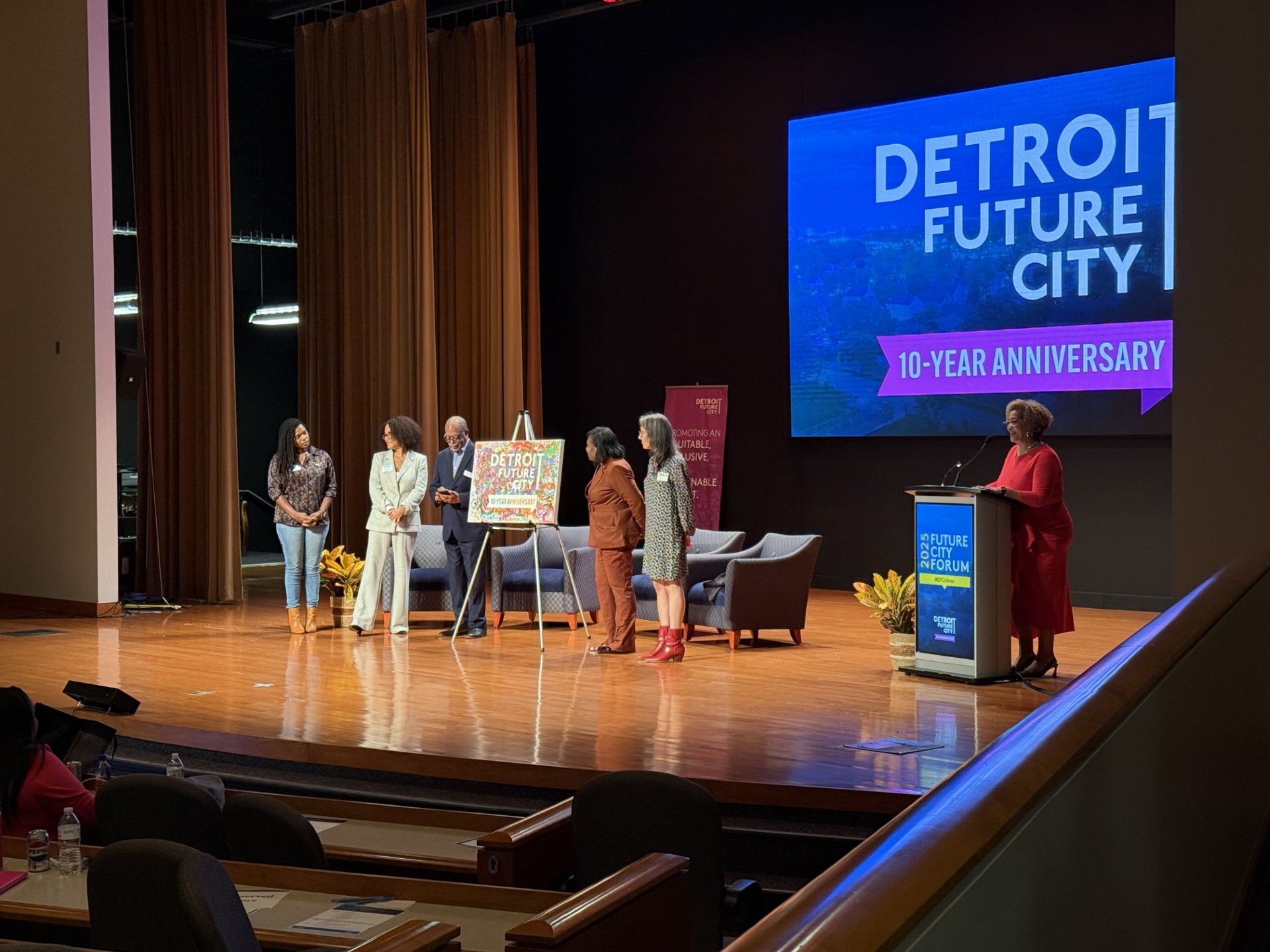
| This Fall marks a decade since Detroit Future City first opened its doors to serve Detroiters.
From its corporation filing on September 9, 2015, to receiving tax-exempt status that November, DFC quickly positioned itself to become a trusted steward of Detroit’s long-term future.
On January 6, 2016, the organization welcomed its first President and CEO, Anika Goss, setting the course for an era of thoughtful, community-centered leadership.
Over the past ten years, DFC has realized many significant accomplishments, including:
- Publishing dozens of influential reports that have shaped policy and practice in land use, sustainability, housing, and economic development.
- Delivering technical assistance and other support to transform many acres of vacant neighborhood parcels into green, productive, and deeply valued community spaces.
- Convening countless planning discussions, workshops, and collaborative projects focused on open space, housing affordability, economic inclusion, and economic equity—ensuring Detroiters’ voices drive the city’s future.
DFC commemorated this milestone at its Forum Pre-Event Reception on September 24, 2025. It is also recognizing its anniversary with a special anniversary logo and periodic social media posts that recall its past successes.
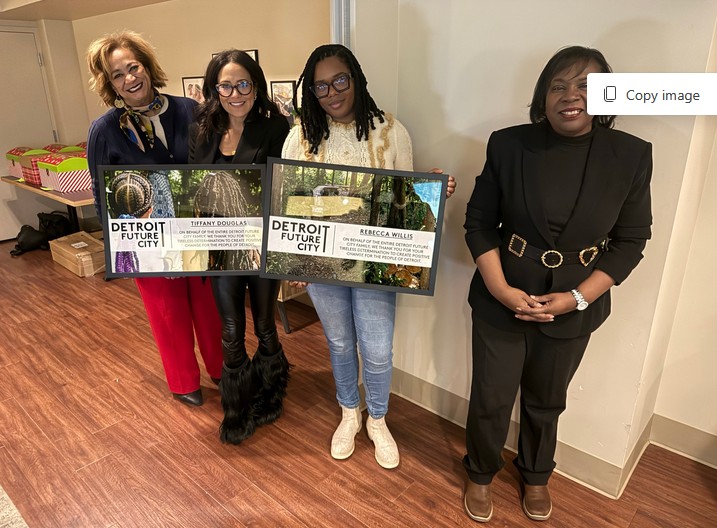
Thank you to the many volunteers, staff, donors, and other supporters who made this work possible – and successful – over the past decade. We look forward to the decade ahead.
|
| DFC is proud to announce that it has been chosen to join the inaugural cohort of the Community Growth Academy — an 18-month initiative from the Michigan Department of Labor and Economic Opportunity (LEO).
Through this program, DFC will receive tailored technical assistance, peer-to-peer learning, state support, and access to competitive grant funding — along with the placement of a full-time fellow to help lead local projects.
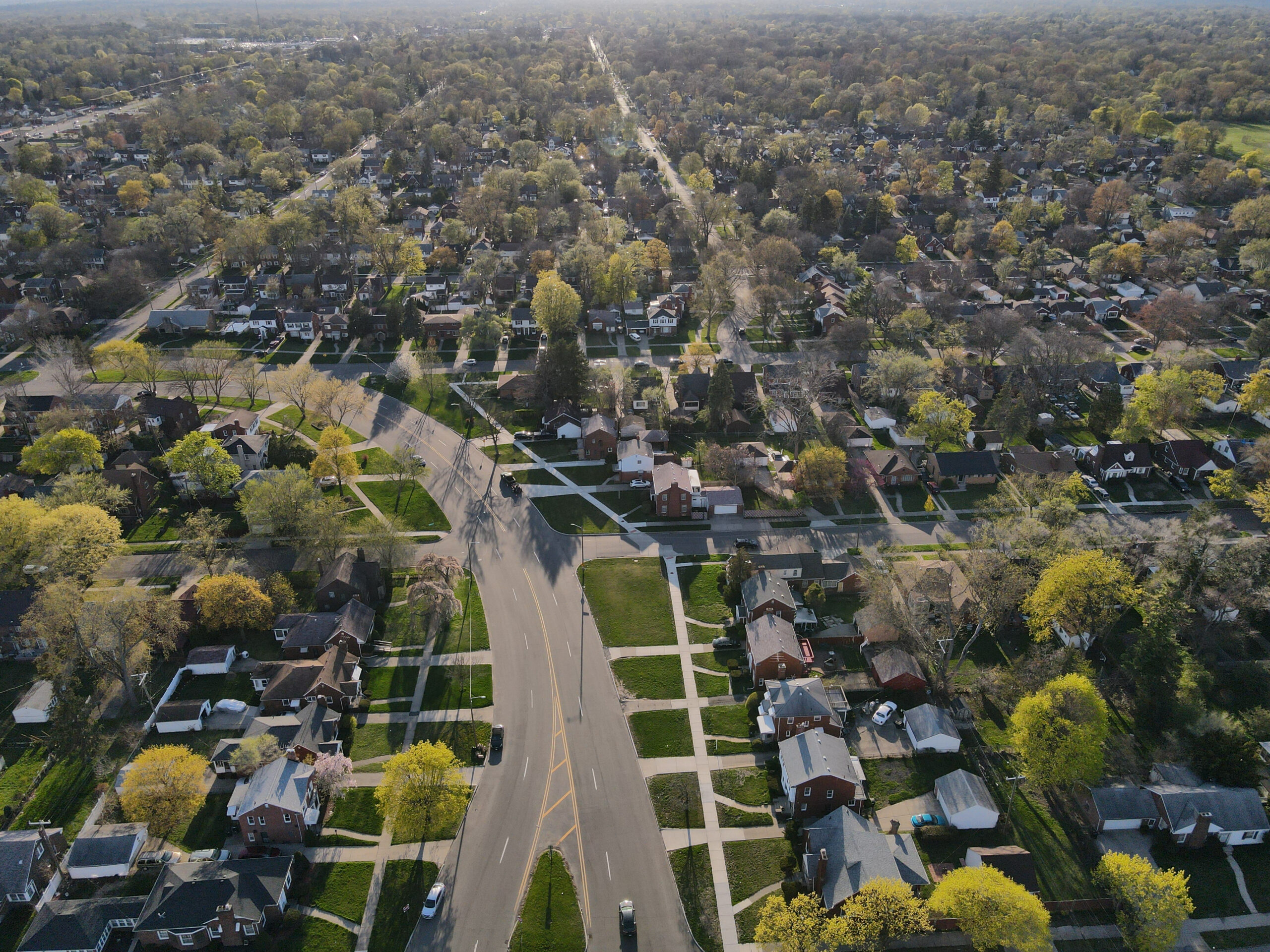
As part of the program, DFC will focus on a 3-square-mile section of Detroit’s near East Side — the area historically known as Black Bottom and Paradise Valley. This is part of DFC’s broader Thriving, Resilient Communities initiative, which aims to bring reparative investment to neighborhoods disrupted decades ago by construction of the I‑375 freeway.
With this new support, DFC is positioned to strengthen its ongoing work around equitable community development — helping to reimagine land use, restore neighborhood vitality, and build economic resilience where it matters most.
Stay tuned for updates on the community-based projects and planning work that result from this exciting opportunity. |