|
Detroit is making progress in reducing housing vacancy.
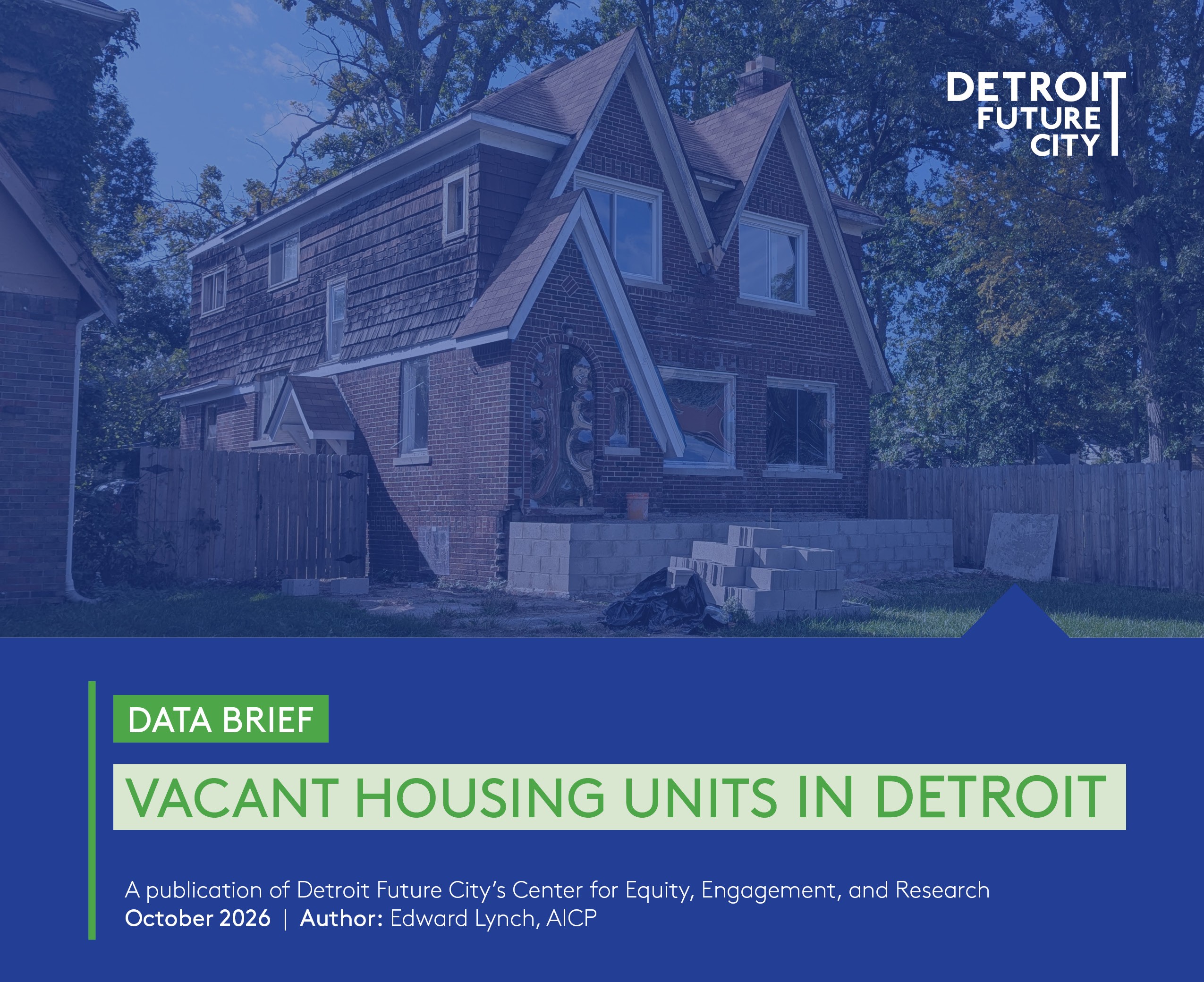
A new data brief from Detroit Future City’s Center for Equity, Engagement, and Research finds that the number of vacant housing units in Detroit fell from 114,468 in 2014 to 69,792—a 39% decrease.
The brief also explores a new American Community Survey table that gives a more detailed picture of vacant units. It shows that thousands of units are being repaired or prepared for rent or sale.
“Understanding what’s behind vacancy helps us see both the progress Detroit has made and the work that remains. The new data gives us a clearer picture of how vacant properties may be returning to the housing market,” said Edward Lynch, Director of Research.
Vacancy remains a significant challenge: Detroit’s overall vacancy rate was 20% in 2025, more than twice the national rate and the highest among the 50 largest U.S. cities. At the same time, homeowner and rental vacancy rates were comparatively low by national standards, at 1.1% and 6.9%, respectively.
Besides the decline in vacant units, there is another reason for cautious optimism. In 2025, 8,986 vacant units were currently being repaired or renovated, and 2,855 were being prepared to rent or sell—a total of more than 11,800 units moving toward the market. The brief also notes that repair needs remain substantial, pointing to continued demand for resources to return viable properties to use.
“This added detail helps us distinguish units that are being abandoned from units that may be on a path back to the market,” Lynch remarked.
|
|
Pathway construction and tree planting is underway in the McDougall-Hunt neighborhood where Detroit Future City is partnering with Bailey Park NDC to plan, design, and construct a network of greenspaces on vacant land throughout the neighborhood. These greenspaces will feature walking paths, tree plantings, native meadow plantings, seating, environmental education, and more.
This first phase of construction features 460 linear feet of ADA-accessible pathways and the planting of 43 trees and a variety of native shrubs. The new trees, which were planted through a partnership with Greening of Detroit, will add beauty to the neighborhood and provide practical environmental benefits. As the trees and shrubs mature, they will help create shade, absorb stormwater, and improve air quality by filtering pollutants—small but lasting investments in a healthier and more resilient neighborhood.
“Tree planting is one way to make visible improvements that residents can experience every day,” said Sarah Hayosh, Director of Land Use and Design at Detroit Future City. “By working alongside Bailey Park NDC and neighborhood leadership, we can support a greener public realm, while building on the community’s own vision for its future,” Hayosh added, “These trees and pathways will strengthen the neighborhood today and for years to come, creating more welcoming spaces for the people who live, work, and spend time there.”
Stay tuned as DFC prepares for the creation of a native meadow and installation of site furnishings on this site in the spring, with additional greenspaces coming soon.
This project is part of DFC’s ongoing work to support climate-resilient, people-centered neighborhood revitalization across Detroit. DFC thanks the Gilbert Family Foundation for providing financial support for the engagement, planning, and implementation of the neighborhood’s greenspace vision plan. Financial assistance for this project is also provided through a Michigan Environmental Justice Impact Grant from the Office of the Environmental Justice Public Advocate in the department of Environment, Great Lakes, and Energy (EGLE).
|